
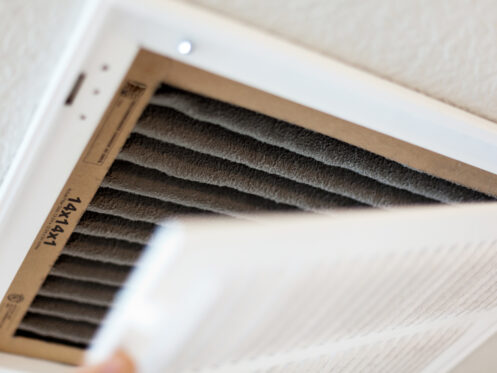
Desert climates like that of Victorville, CA experience persistent indoor air quality (IAQ) concerns. A good place to start improving your IAQ is investing in air filters that are designed specifically for the desert climate. Here’s how this helps.
Implications of Desert Living
It is challenging to maintain a safe and healthy indoor environment in a desert climate, but it is possible with the right approach. Desert dust is light and travels long distances on frequent and powerful winds. Extreme temperature swings create strong pressure differences that drive wind movement, lifting dust, pollen, and other debris and carrying them everywhere.
Many homeowners close their windows and doors to escape heat and dust storms. This reduces the amount of fresh air entering the home, and without enough air exchange, indoor pollutants begin to build up. Indoor pollutants such as cooking fumes, volatile organic compounds (VOCs) from cleaning products, and off‑gassing from building materials linger longer than they would in a temperate climate.
The filter becomes the main line of defense, capturing both the fine desert particles entering from outside and the pollutants generated indoors. When the filter is not appropriate for desert conditions, it clogs quickly, reduces airflow, and forces the system to work harder than it should.
The Best Air Filter for Your Home
The best air filters for a desert climate must be able to handle high volumes of fine, abrasive dust, sand, and high heat. They use stronger materials, tighter construction, and media that can withstand constant exposure to challenging conditions, including extreme moisture and temperature swings. Look for filters like the following.
Advanced Pleated Filters
Pleated filters are the standard filters used in HVAC systems. They usually consist of materials such as polyester, cotton, or cellulose held together by thick, heavy-duty cardboard.
Pleated filters for a desert climate typically use synthetic polyester or polypropylene fibers for their filter media. These materials are abrasion resistant, moisture tolerant, and capable of holding a larger volume of fine dust without collapsing.
The frame of a desert‑ready pleated filter is also reinforced to prevent warping or bending when exposed to high heat or heavy dust accumulation. They may also include additional water-resistant coating to help the filter remain in its shape during periods of high humidity.
Desert-ready pleated filters are a good choice because they are very durable, efficient, and reliable. They will not only keep your indoor space healthy and safe but also help your air conditioner last longer.
Fiberglass Air Filters
Fiberglass air filters are often the affordable alternative to standard pleated air filters. They usually consist of layered, spun glass fibers woven into a flat panel that sits inside a thin cardboard frame. This simple construction keeps costs low and allows air to pass through easily, helping to maintain strong airflow in older or weaker HVAC systems.
However, even upgraded fiberglass filters are generally less effective at capturing fine desert dust compared to pleated filters and are best used when maintaining airflow is the primary concern. These upgraded filters use progressively dense, non-woven spun glass fibers that improve airflow control and provide better particle capture than basic fiberglass filters, though they still do not match the efficiency of pleated options. The gradual density of the fibers also allows them to perform in temperatures as high as 300°F.
They stand out among other filter types because the inorganic spun glass is naturally resistant to corrosion, moisture, and microbial growth. They are also relatively affordable, which allows homeowners to replace them more frequently during heavy dust periods without straining their budget.
Other Ways to Improve Indoor Air Quality in a Desert Climate
After getting a reliable filter, your next step toward improving indoor air quality is to invest in a high‑quality whole‑home humidifier. The desert climate has extremely low humidity for most of the year, and this dryness affects both comfort and air quality. When the air is too dry, pollutants become lighter and more easily airborne, so they circulate longer and settle more slowly.
Allergies often flare up because the nasal passages and throat lose moisture, and this reduces the body’s natural ability to filter out irritants.
A whole‑home humidifier helps restore balance by gently adding consistent moisture to the air. This added moisture helps weigh down fine dust and allergens so that they fall out of circulation more quickly. It also keeps your respiratory system from drying out, which supports easier breathing and reduces the irritation caused by desert dust.
Contact Aace's Heating, Air Conditioning & Swamp Coolers for More Information
Aace's Heating, Air Conditioning & Swamp Coolers can help improve your indoor air quality in Victorville. Our licensed technicians will examine your HVAC equipment, test your indoor air, and consider the environmental factors in and around your home to offer the best tailored solution.
Call Aace's Heating, Air Conditioning & Swamp Coolers today for indoor air quality services in Victorville.